

Behind the Design: Rushfaster EDC Sling Bag 4L
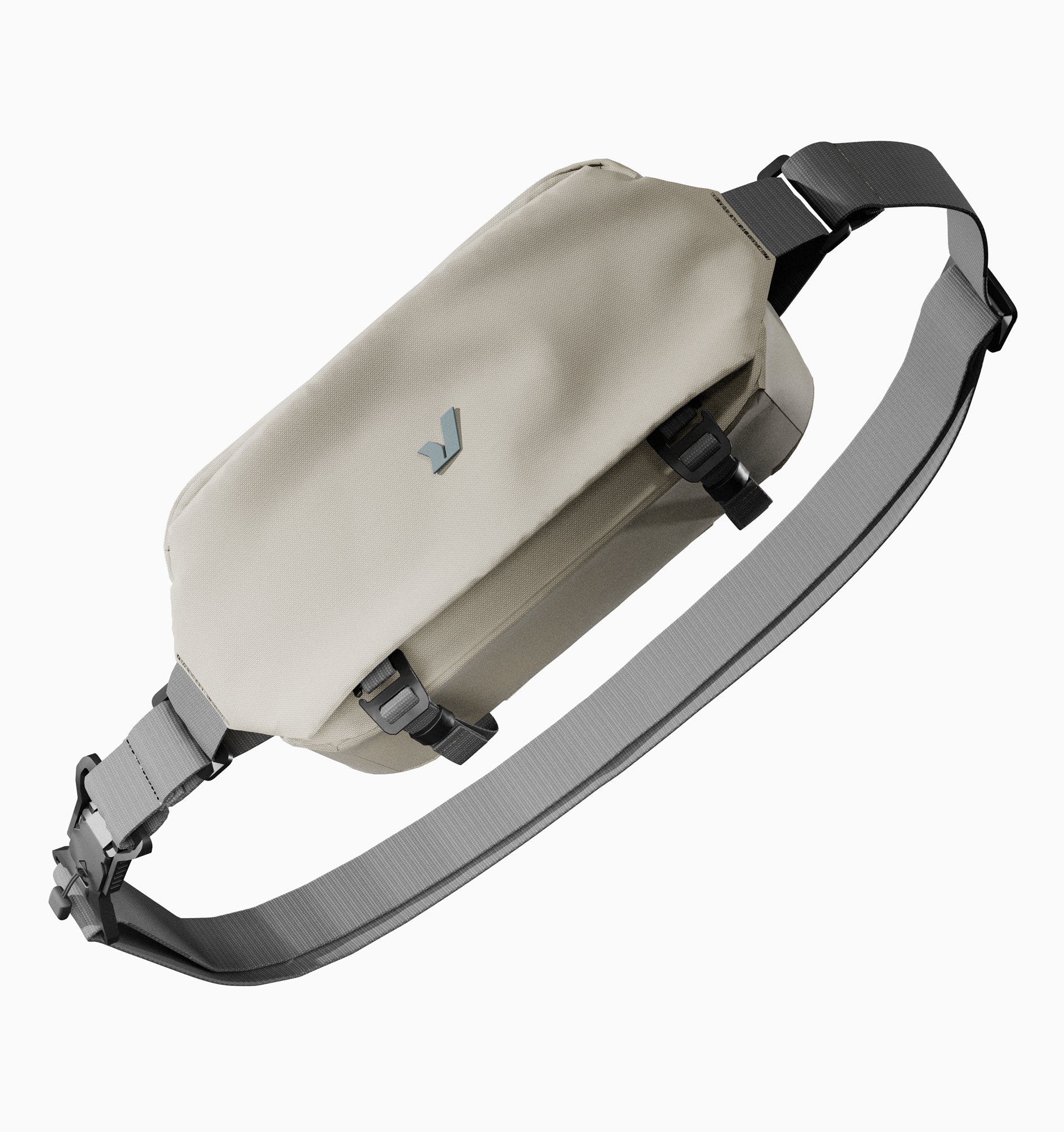
To us at Rushfaster, the EDC Sling Bag 4L represents a balance between utility, simplicity, and personal style in everyday carry.
In this Behind the Design, our Product Design Director, Hadrien Monloup, discusses the thinking behind the sling and how it was designed to sit at the intersection of function and fashion, adapting to how you wear and live with it day to day.
A Different Kind of Carry
The sling sits in a different category to backpacks or more technical carry. In Hadrien’s view, it’s closer to a personal accessory than a purely functional tool.
“It’s more of a fashion piece,” he explains. “It’s very personal. It needs to fit with your style.”
Where you wear it—across the shoulder, at the front, or at the back—changes how it reads visually. It becomes part of your outfit and your identity, not just something you use to carry items. At the same time, it still needs to perform a simple role: carrying the essentials from your pockets in a more organised way.
Between Utility and Fashion
The design challenge with a sling is tension. Too technical, and it becomes a small camera bag. Too minimal, and it becomes impractical. Hadrien describes it as a space between utility and street fashion—similar in some ways to sneakers. There is function, but it’s not purely utility-driven.
“You need enough functionality to carry what you need,” he notes, “but not so much that it becomes heavy or complicated.”
The goal was to avoid both extremes: overly complex organisation on one side, and empty styling on the other.
The Problem With Over-Designed Storage
From Hadrien’s perspective, many slings fall into one of two categories:
- Highly technical with multiple compartments and segmentation
- Or overly simple, where everything goes into one main compartment
Both have issues. Too many pockets add weight, complexity, and bulk. Too few create frustration when everything mixes together. In both cases, the experience starts to get in the way of itself. The design challenge became clear: bring structure without overcomplication.
A Simple Layered System
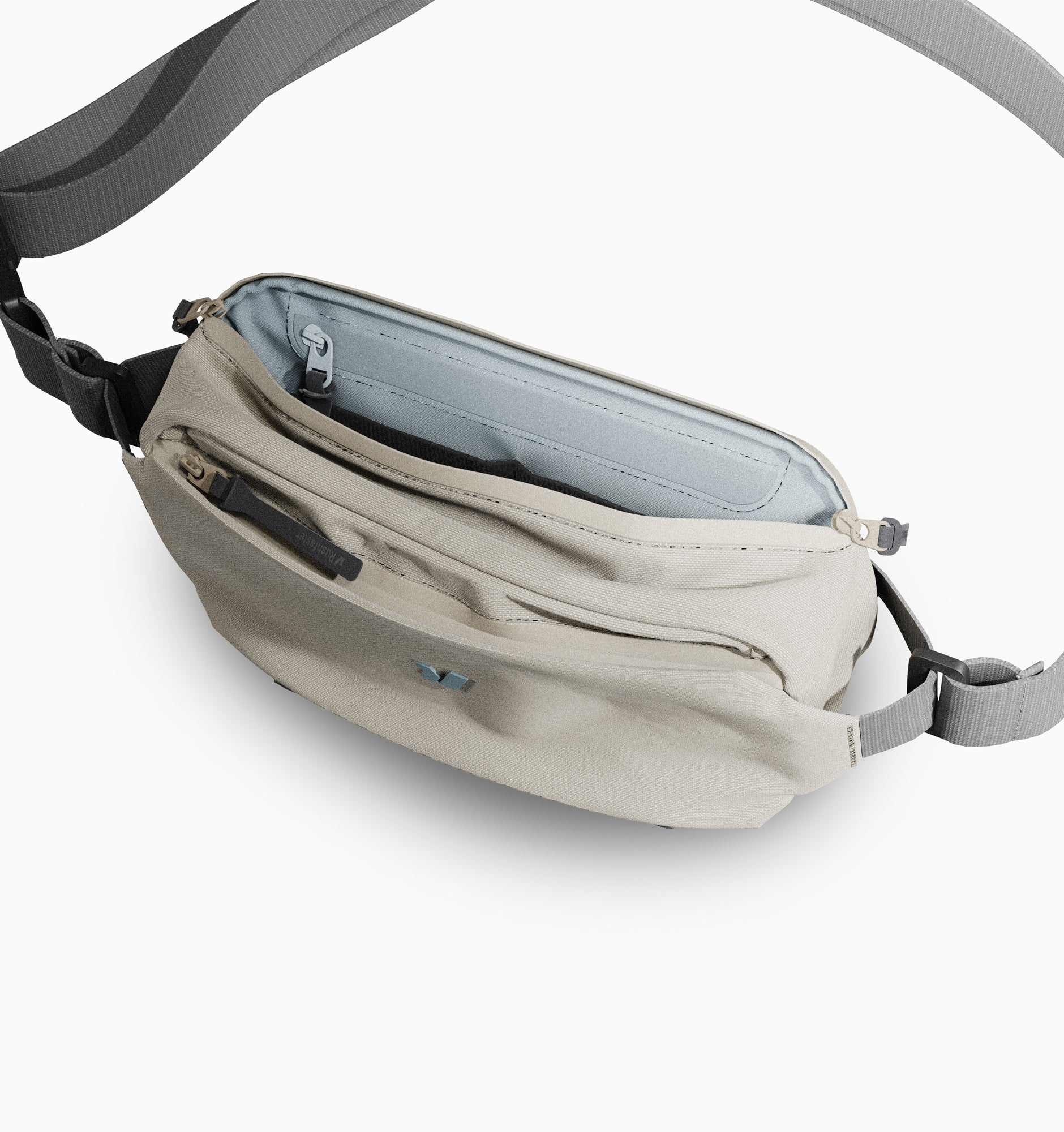
The solution was a layered approach to storage that balances clarity and flexibility:
- Main compartment: for larger or mixed items
- Internal pockets: for quick-access essentials and organisation
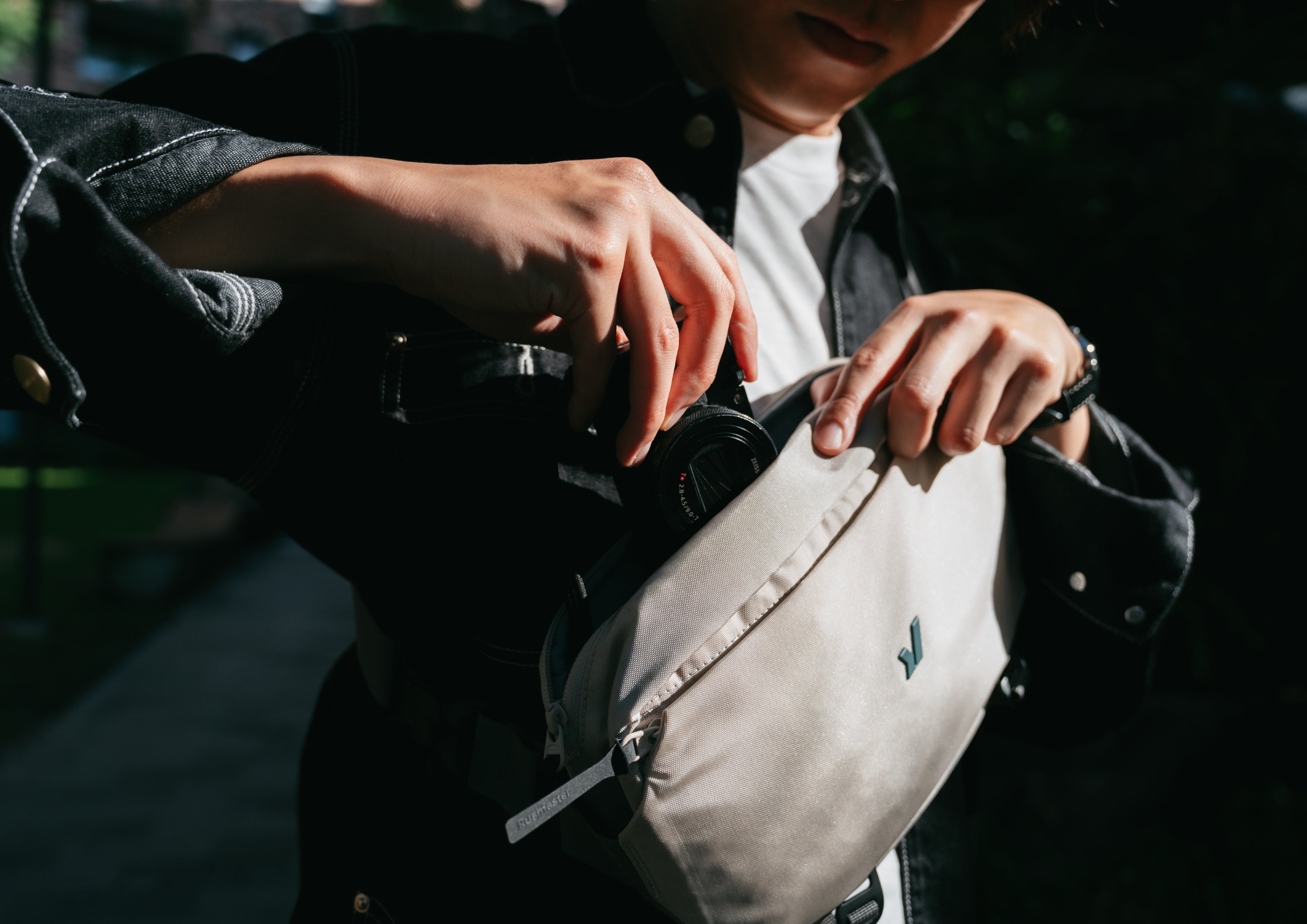
- Front access pocket: for on-the-go items like a small tablet, e-reader, or notebook
As Hadrien explains, the intention was to create a system that feels intuitive in motion. You don’t need to think about where things go—you just reach for them naturally.
The front pocket, in particular, is designed for quick interaction without fully opening the main compartment. It keeps the experience fast and controlled.
Designed Around Movement and Volume
One of the key design considerations is how the sling behaves when it’s worn. When lightly packed, it should sit flat against the body. When fuller, it should expand without becoming bulky or unstable.
“If you don’t carry much, it should compress,” Hadrien says. “And when you carry more, it shouldn’t feel like a box on your back.”
This balance is critical. A sling is constantly in motion, and any excess volume or poor structure becomes immediately noticeable.
Built to Adapt to the Day
A core idea behind the design is adaptability. Some days it carries only essentials. Other days it might include a phone, cables, a camera, or travel items. The structure is designed to handle both ends of that spectrum.
Hadrien points out that many existing products fail here—working well when lightly loaded, but breaking down when you add more. The Rushfaster EDC Sling Bag 4L is designed to adapt to the day, not force the day to adapt to it.
Minimal Hardware, Flexible Personality
Details like buckles and attachment points are intentionally designed to be subtle and adaptable. They add function when needed—such as attaching a lightweight jacket—but can also be hidden when a cleaner look is preferred. This gives the sling a dual personality: active and functional when you need it, minimal and clean when you don’t.
“It should support your style, not take over your style,” Hadrien explains.
A Balance of Simplicity and Character
A key design tension was ensuring the sling felt simple, but not empty. It needed enough detail to feel considered—textures, webbing, and subtle construction elements—without becoming visually loud or overly technical.
The result is a product that sits comfortably in both functional and lifestyle contexts. It doesn’t demand attention, but it also doesn’t disappear completely.
Designed for Real Use, Not Ideal Use
The sling was shaped around real-world scenarios rather than perfect organisation. Hadrien highlights a common frustration: when products force you into rigid use cases. If something doesn’t fit neatly, it becomes inconvenient—or worse, unusable.
Instead, this sling is designed to absorb variation in how people carry things. Different days. Different loads. Different needs. The structure stays consistent, even when the contents change.
Simplicity as the Final Outcome
What stands out most in Hadrien’s view is not any single feature, but the overall feel of the product.
“It’s beautiful in its simplicity,” he says. “It’s functional, adaptable, and it doesn’t overpower how you want to use it.”
That balance—between utility, minimalism, and personal expression—is where the design settles. It’s not about adding more compartments or features. It’s about making sure the experience stays effortless.
A Product That Adapts to You
For us at Rushfaster, the EDC Sling Bag is about restraint and adaptability working together. It carries enough structure to be useful, enough simplicity to stay lightweight, and enough character to feel personal. Because in the end, the best carry doesn’t compete with your style. It adapts to it.
Watch Now
Read more
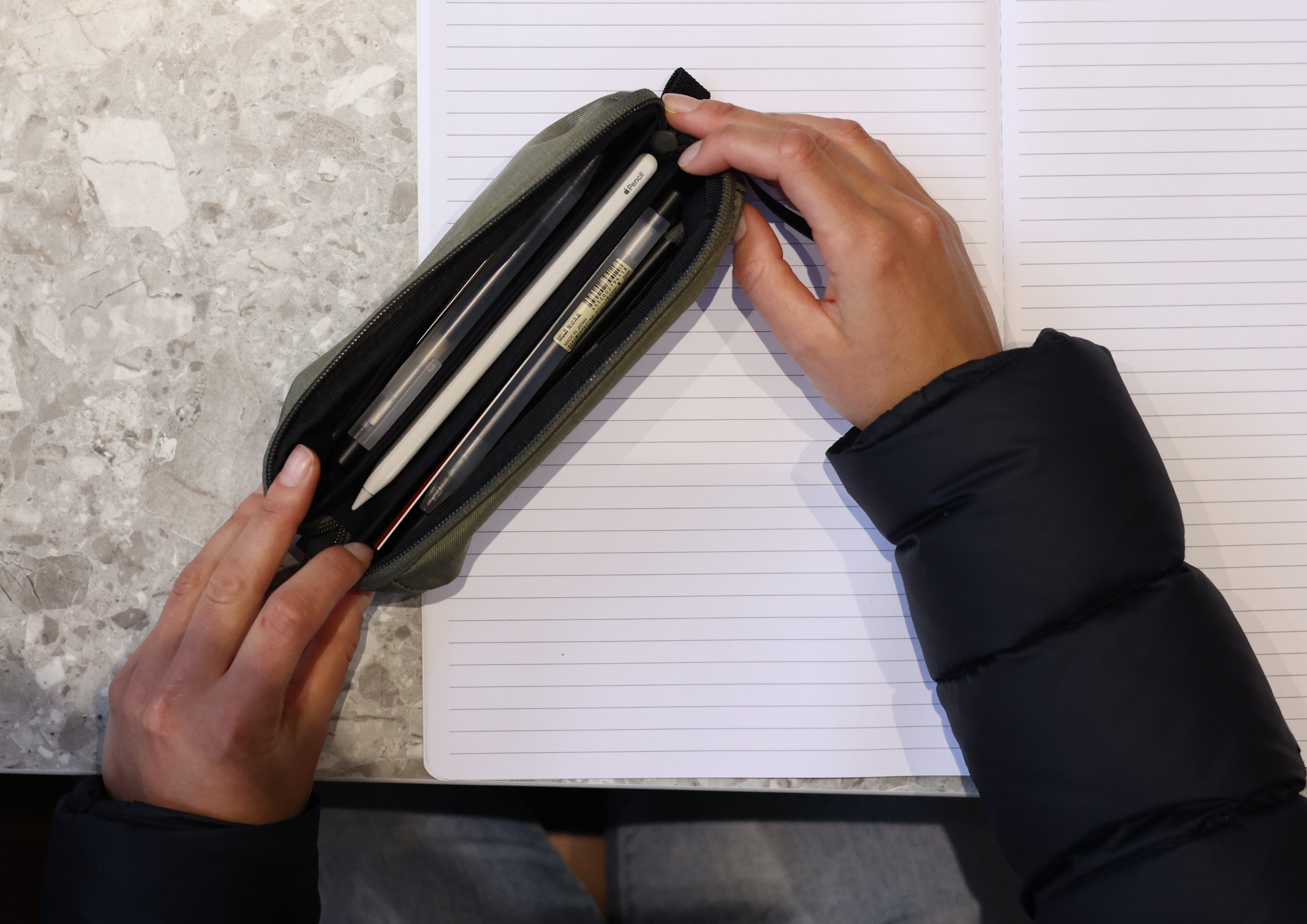
At first glance, it appears to be just a pencil case. But for us at Rushfaster, it represents something much more—a condensed expression of how we think about design: simple, adaptable, and frictio...

In this Behind the Design, we explore the thinking behind the Rushfaster EDC Pro Backpack 26L—from its refined pocket architecture to the idea of separating “quick thinking” from “deep work Designe...
Leave a comment
This site is protected by hCaptcha and the hCaptcha Privacy Policy and Terms of Service apply.